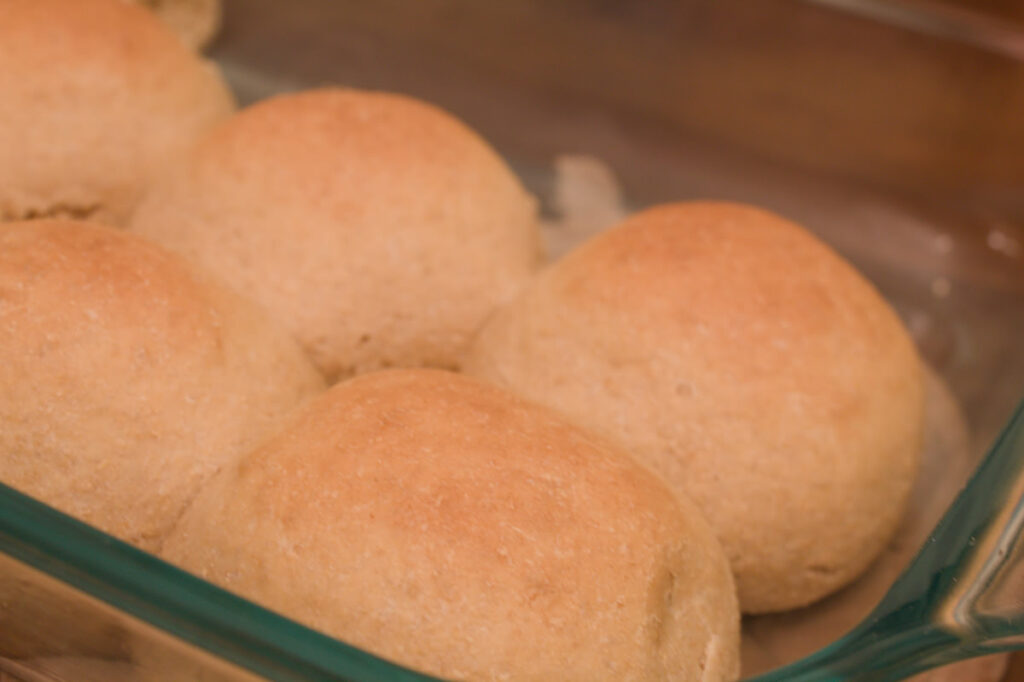
How to Make Homemade Dinner Rolls From Scratch
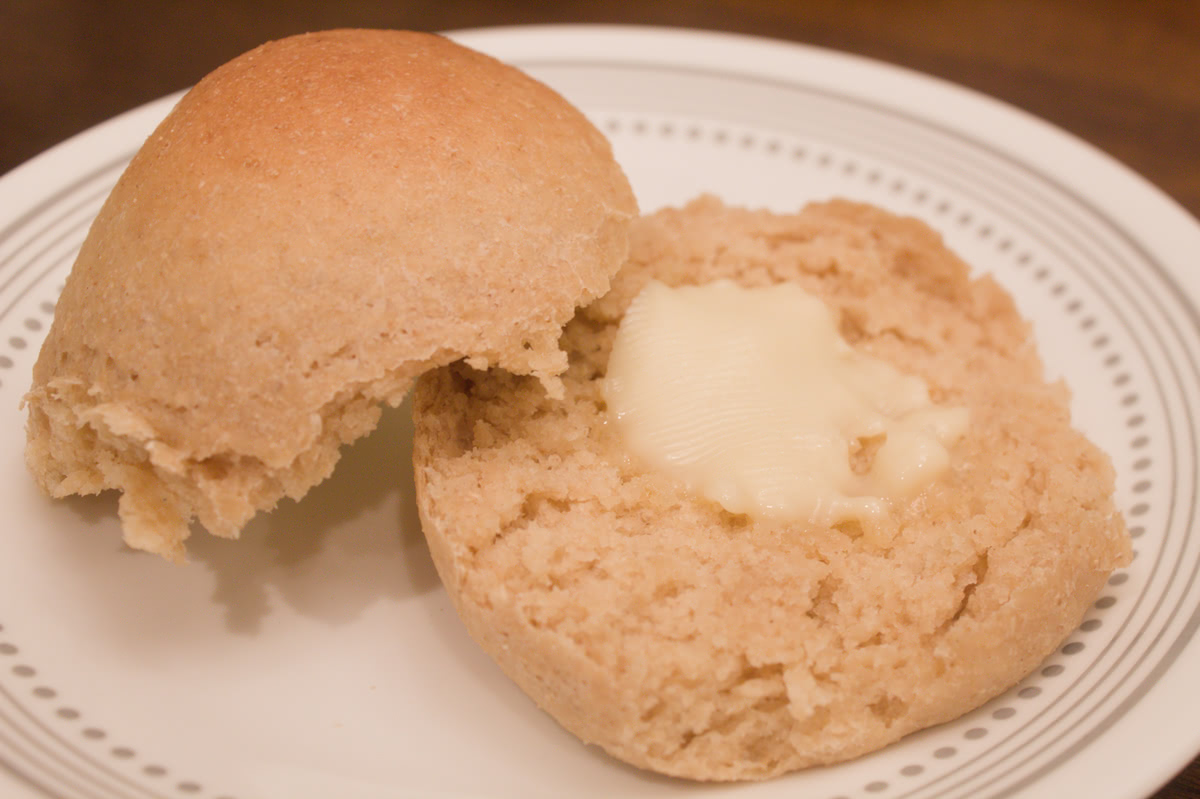
After a lot of bread making I have come to realize that I don’t need to follow an exact recipe or have the exact right ingredients in order to make delicious homemade dinner rolls from scratch.
I have never really had a go-to roll recipe. One day I was looking for a roll recipe that used the exact ingredients I had. I don’t recall what those ingredients were, but I remember looking at recipe after recipe. I wanted a recipe that told me that the exact amount of butter or cream or whatever I had was exactly what I needed to make the rolls.
While looking, I saw a huge variety of different roll recipes. Each had varying amounts of butter, sugars, eggs, milk, etc. Then I realized that I actually probably didn’t need a recipe after all. If I knew the ingredients that I wanted to use I could use them and the rolls would likely turn out just fine.
The key to making a successful roll is to have the right ratio of wet and dry ingredients. In order to determine if you have the ratio correct, look at the texture and dryness of your dough. Because you are mainly looking at the consistency of the dough, most bread recipes have a range of how much flour to use. Depending on how you measure your flour you may need more or less of it to get the right texture of dough.
In the end your own judgement ends up being the deciding factor about whether you have enough flour or not. This lowers the necessity of a recipe to very little.
Homemade Dinner Rolls with Instant Yeast vs Sourdough
Whether I use sourdough or yeast in my rolls depends on a couple factors. If I am on a time crunch I will use yeast, because depending on how much yeast you use you can have rolls in as quick as an hour. In order to use sourdough, your dough will need at least 8 hours in a warm environment to rise enough for a fluffy roll.
If I remember and have time in the morning or even the day before I need rolls, I use sourdough. The amount of hands-on time the rolls take for yeast vs sourdough is pretty comparable, so which you choose will mostly be determined by when your hands are free.
Regardless of whether you use yeast or sourdough, it is nice to remember that you can slow the rising process simply by putting the dough in the fridge. So if you start a dough but aren’t able to finish it until later you can simply put your bowl of dough in the fridge and pick up where you left of when you are ready.
What are the Basic Ingredients for Homemade Dinner Rolls?
- Up to 1/2 cup fat: butter, shortening, lard, or the fat can be excluded entirely if using a higher fat liquid.
- 1 1/2-2 cups liquid: milk, buttermilk, cream, or water. The higher the fat content, the less fat you can use.
- Leavening: 1 tbsp yeast or 1/2 cup sourdough starter
- 1 tsp salt
- Up to 1/4 cup sweetener, such as sugar or honey
- Optional egg
- About 5-7 cups wheat flour: all purpose, whole wheat, bread flour, or a combination can be used.
How to Make Homemade Dinner Rolls From Scratch With What You Have
Mix the Ingredients
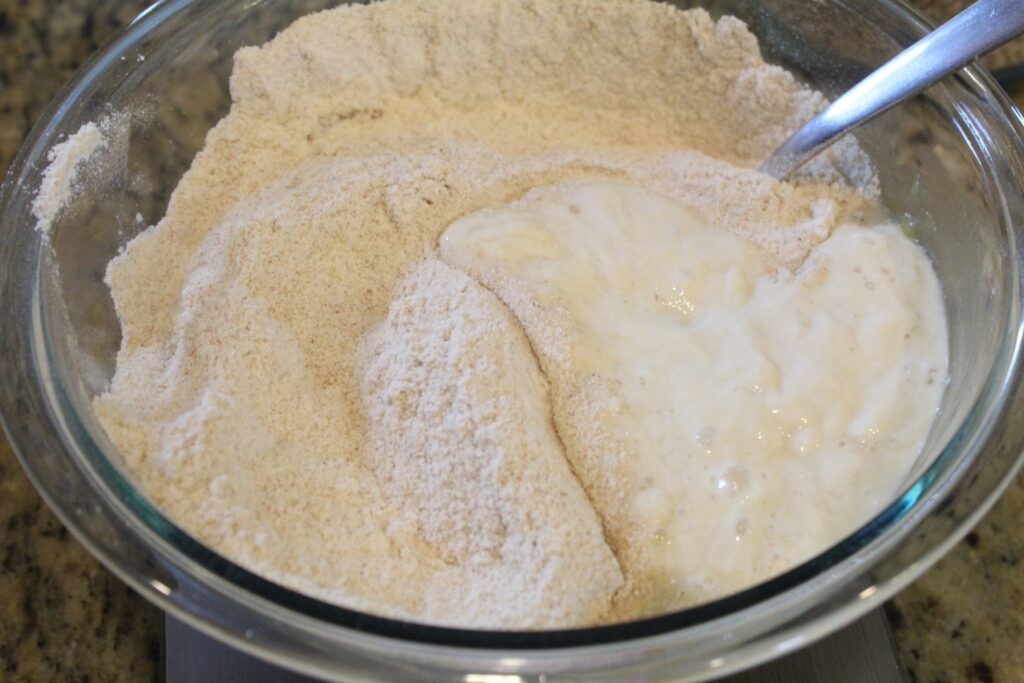
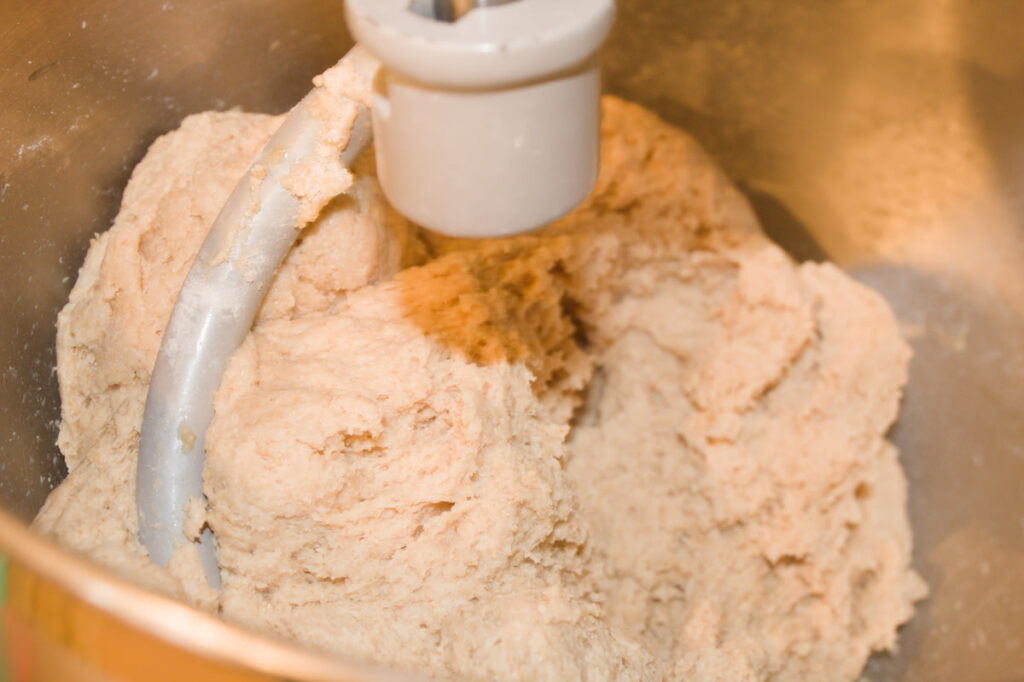
Add the ingredients to a mixer, or mix by hand. Once the ingredients are combined, check the dough’s consistency. Add more liquid or more flour until the dough is soft but not sticky.
Develop the Gluten
One of the most important steps in bread making is developing the gluten. There are three processes that can help develop gluten: working the dough, heat, and time. The most common way to develop gluten is through working the dough, by kneading or preforming stretch and folds.
When using yeast (especially instant or rapid rise yeast) it is important that the gluten develops quickly. To do this you need to knead the dough. It is easiest to knead roll dough in a stand or bread mixer, but it can also be done by hand by folding and pressing the dough continuously. A dough made with all purpose or bread flour takes less time to knead than one made with whole wheat flour. You know the gluten is developed when the dough can be stretched without breaking.
Another way I have discovered I can develop gluten quickly is to use warm liquid in my recipes. The hotter the liquid the better, but make sure not to add liquid hotter that 110° F after adding the yeast or sourdough starter. Doing so can kill the yeast or starter.
When using sourdough starter you are able to use time to your advantage. Stretch and folds can be used to develop the gluten rather than kneading. To preform a stretch and fold, grab one side of the dough and stretch it, then fold it over the top of the rest of the dough. Rotate your bowl 1/4 turn and repeat the process around the bowl. To sufficiently develop the gluten, preform stretch and folds every 15-30 minutes for about 2 hours, visiting the dough at least 4 times. Time itself helps to develop the gluten so there is no pressure to be exact as sour dough requires a slow rise over several hours.
First and Second Rise
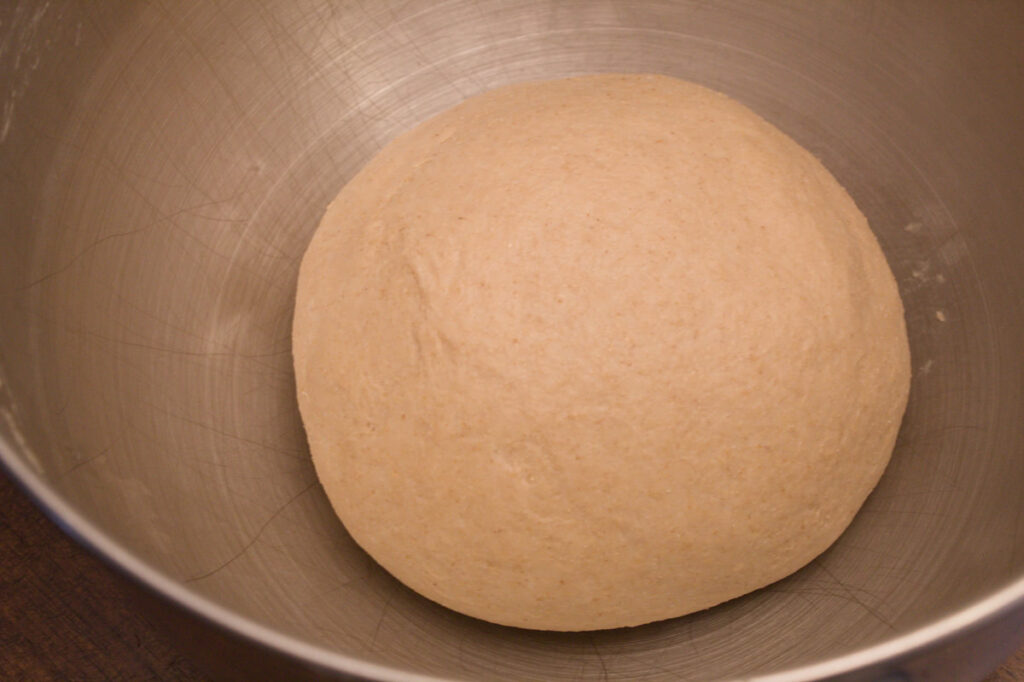
Once you have finished developing the gluten, the next step is to let the dough rise. For the first rise let the dough sit covered at room temperature until it has doubled in size. This will take only a few hours for dough with yeast, but for sourdoughs it can take 4-12 hours depending on the room’s temperature. In order to speed up the process you can place the dough in the oven with the light on. To slow down (or halt) the process, place the dough in the refrigerator.
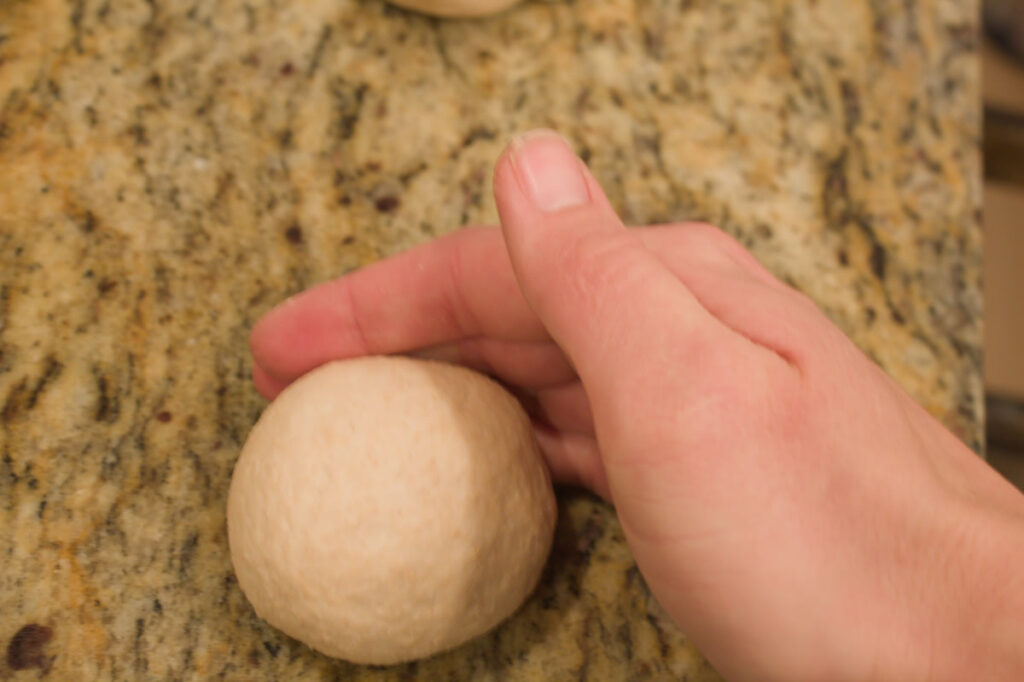
Once the dough has doubled, it is time to shape. You can shape it in any way (knots, rolls, or crescents). I most often make a classic roll by cutting the dough into equal portions then pinching the corners into to the middle to make it round. Next, take each roll and slide it towards you on the counter to build tension.
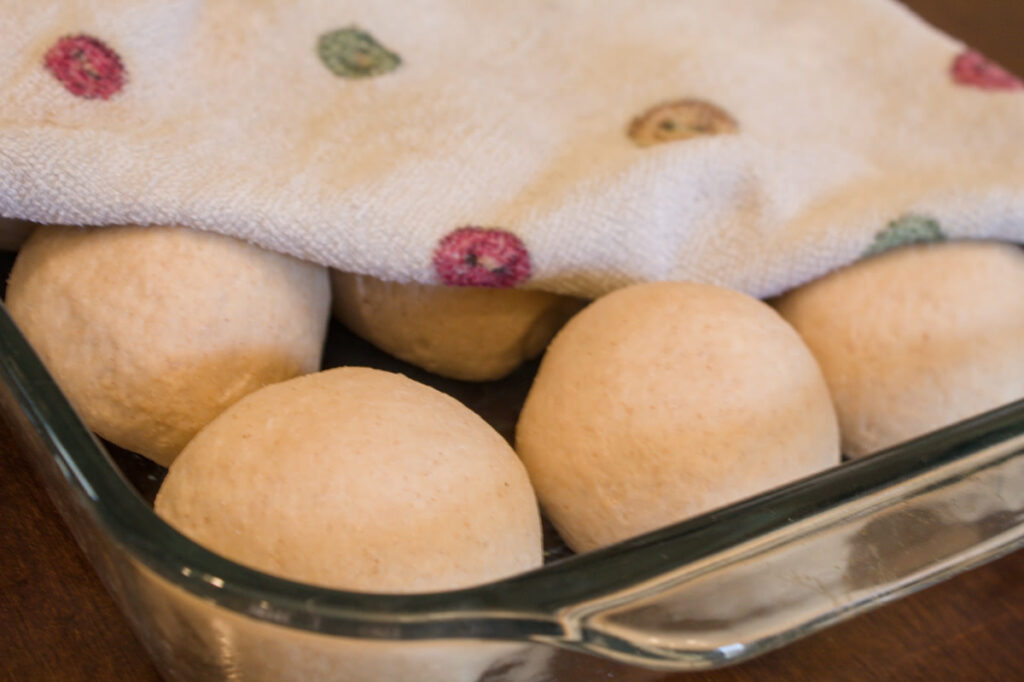
After all your rolls are shaped you are ready for the final rise. Cover the rolls and let them sit at room temperature until fluffy. For yeast doughs, 20-60 minutes is sufficient, but for sourdoughs 2-4 hours+ will yield a softer roll. Again, this process can be sped up in the oven with the light on or slowed down in the fridge. I often don’t have a lot of patience at this point in the process, so I tend to put my rolls in the oven as quickly as possible. This sadly gives me a more dense result. Patience is a virtue when making rolls, so make sure to leave yourself plenty of time for the second rise.
How to Bake Homemade Dinner Rolls
Once your rolls have sufficiently risen, bake them in a 350° F oven for 20-25 minutes or until golden and they reach an internal temperature of 190° F.
If desired, brush the top of each roll with some butter to give it a nice shine! Enjoy your homemade dinner rolls warm with a bowl of soup or topped with some butter, honey, or jam.